
Asia
Macau — map and facts
Here you find a map of Macau, capital Macao, currency Pataca and quick links to more facts about the country in Asia.
About the country
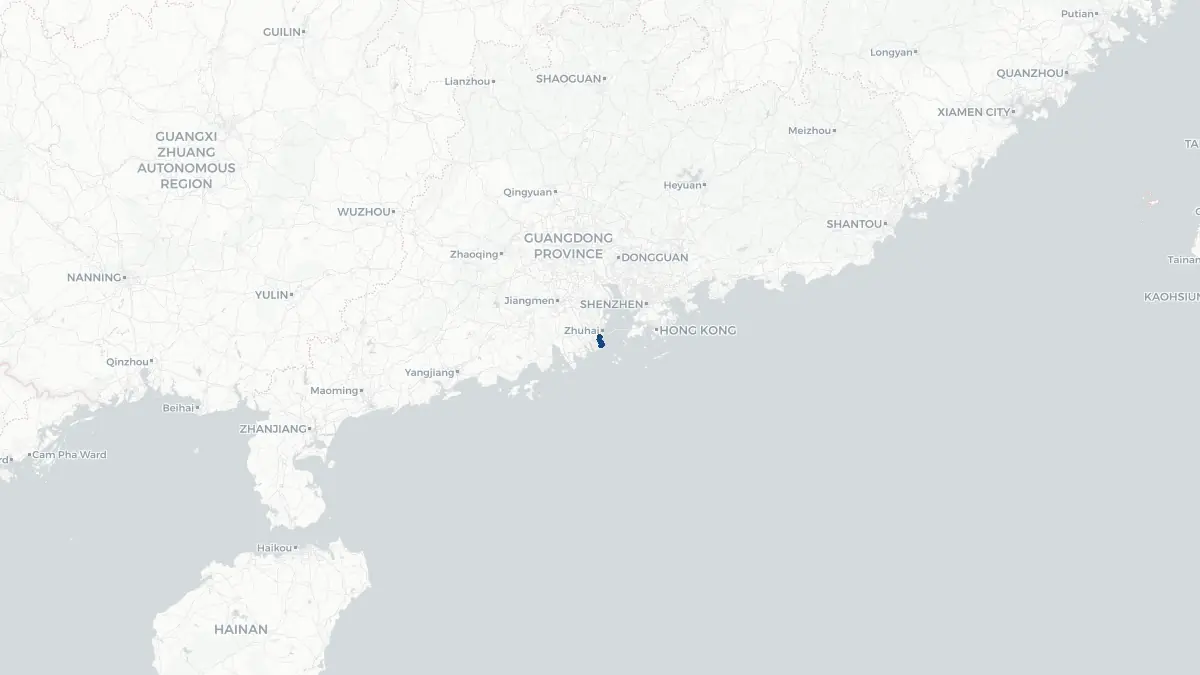
Macau on the map
About Macao
Macao is a Special Administrative Region of the People's Republic of China, located on the western side of the Pearl River Delta in southern China, adjacent to Guangdong Province and approximately 60 kilometres west of Hong Kong. It has a population of around 680,000 people in an area of just 33 square kilometres, making it one of the most densely populated territories in the world. Like Hong Kong, Macao operates under the "one country, two systems" framework, preserving a distinct legal system and substantial autonomy until at least 2049. Sovereignty was transferred from Portugal to China on 20 December 1999, ending over four centuries of Portuguese presence. The official languages are Chinese (Cantonese) and Portuguese. Macao's economy is dominated overwhelmingly by gaming and tourism: its casino industry generates revenues that make it one of the most productive gaming centres on earth, far surpassing Las Vegas in total revenue.
Geography and Landscape
Macao consists of the Macao Peninsula, which is connected to mainland China, and two islands, Taipa and Coloane, which have been largely merged by land reclamation into a new area known as Cotai. The total land area is approximately 33 square kilometres, much of it reclaimed from the sea in successive phases of development. The terrain on the peninsula includes a few low hills, with Guia Hill at 90 metres being the highest point. The landscape is almost entirely urban, with little natural greenery beyond the Seac Pai Van Park on Coloane and a small section of coastal wetland. The Pearl River estuary surrounds the territory, and regular heavy rainfall, typhoons from May to November, and high humidity characterise the subtropical climate. The Cotai Strip, built on reclaimed land between Taipa and Coloane, hosts the largest concentration of integrated casino resorts and has transformed the territory's skyline.
History
Macao was settled by Portuguese traders in the mid-sixteenth century, becoming a formal Portuguese colony in 1557. It functioned as the primary gateway for European trade with China and Japan for centuries, and its unique position made it a vital entrepôt for silk, spices, and silver. Jesuit missionaries used Macao as a base for their activities in East Asia, and the Ruins of St. Paul's Cathedral remain the most recognisable symbol of this heritage. As China opened to direct trade and after the opening of Hong Kong in 1842, Macao's commercial importance declined. In the twentieth century, Macao developed a casino and tourism industry that expanded massively after gaming was liberalised and foreign operators were permitted following 2002. Portugal recognised Chinese sovereignty over Macao in the 1987 Sino-Portuguese Joint Declaration, and the handover took place on 20 December 1999. The historic centre of Macao was inscribed as a UNESCO World Heritage Site in 2005, recognising its unique blend of Portuguese and Chinese architectural heritage.
Geo Quiz
Think you know your capitals, flags, and continents? Take the quiz!
Neighbouring countries
Continue to nearby countries
There are no registered neighbouring countries for Macau in the current database.
More countries in the same part of the world
Asia index
Open the continent hub for Asia to see the full country list, capitals and frequently asked questions on one page.
Interactive map
Zoomable map of Macau
Country index
All countries by continent
Jump directly to the right section or keep scrolling.
Africa
58 countries- Algeria
- Angola
- Benin
- Botswana
- Burkina Faso
- Burundi
- Central African Republic
- Djibouti
- Democratic Republic of the Congo
- Egypt
- Equatorial Guinea
- Ivory Coast
- Eritrea
- Ethiopia
- Gabon
- Gambia
- Ghana
- Guinea
- Guinea-Bissau
- Cameroon
- Cape Verde
- Kenya
- Comoros
- Republic of the Congo
- Lesotho
- Liberia
- Libya
- Madagascar
- Malawi
- Mali
- Morocco
- Mauritania
- Mauritius
- Mayotte
- Mozambique
- Namibia
- Niger
- Nigeria
- Reunion
- Rwanda
- Saint Helena
- Sao Tome and Principe
- Senegal
- Seychelles
- Sierra Leone
- Somalia
- Sudan
- Swaziland
- South Africa
- South Sudan
- Tanzania
- Chad
- Togo
- Tunisia
- Uganda
- Western Sahara
- Zambia
- Zimbabwe
Asia
52 countries- Afghanistan
- Armenia
- Azerbaijan
- Bahrain
- Bangladesh
- Bhutan
- British Indian Ocean Territory
- Brunei
- Myanmar
- Philippines
- United Arab Emirates
- Georgia
- Hong Kong
- India
- Indonesia
- Iraq
- Iran
- Israel
- Japan
- Yemen
- Jordan
- Christmas Island
- Cambodia
- Kazakhstan
- China
- Kyrgyzstan
- Cocos Islands
- Kuwait
- Laos
- Lebanon
- Macau
- Malaysia
- Maldives
- Mongolia
- Nepal
- North Korea
- Oman
- Pakistan
- Palestinian Territory
- Qatar
- Saudi Arabia
- Singapore
- Sri Lanka
- South Korea
- Syria
- Tajikistan
- Taiwan
- Thailand
- Turkey
- Turkmenistan
- Uzbekistan
- Vietnam
Europe
53 countries- Albania
- Andorra
- Belgium
- Bosnia and Herzegovina
- Bulgaria
- Cyprus
- Denmark
- Estonia
- Finland
- France
- Faroe Islands
- Gibraltar
- Greece
- Guernsey
- Ireland
- Iceland
- Isle of Man
- Italy
- Jersey
- Kosovo
- Croatia
- Latvia
- Liechtenstein
- Lithuania
- Luxembourg
- Macedonia
- Malta
- Moldova
- Monaco
- Montenegro
- Netherlands
- Norway
- Poland
- Portugal
- Romania
- Russia
- San Marino
- Switzerland
- Serbia
- Slovakia
- Slovenia
- Spain
- United Kingdom
- Svalbard and Jan Mayen
- Sweden
- Czech Republic
- Germany
- Ukraine
- Hungary
- Vatican
- Belarus
- Aland Islands
- Austria
North America
42 countries- U.S. Virgin Islands
- Anguilla
- Antigua and Barbuda
- Aruba
- Bahamas
- Barbados
- Belize
- Bermuda
- Bonaire, Saint Eustatius and Saba
- British Virgin Islands
- Cayman Islands
- Costa Rica
- Curacao
- Dominica
- Dominican Republic
- El Salvador
- Grenada
- Greenland
- Guadeloupe
- Guatemala
- Haiti
- Honduras
- Jamaica
- Canada
- Cuba
- Martinique
- Mexico
- Montserrat
- Netherlands Antilles
- Nicaragua
- Panama
- Puerto Rico
- Saint Barthelemy
- Saint Kitts and Nevis
- Saint Lucia
- Saint Martin
- Saint Vincent and the Grenadines
- Saint Pierre and Miquelon
- Sint Maarten
- Trinidad and Tobago
- Turks and Caicos Islands
- United States
South America
14 countriesOceania
27 countries- American Samoa
- Australia
- Cook Islands
- Fiji
- French Polynesia
- United States Minor Outlying Islands
- Guam
- Kiribati
- Marshall Islands
- Micronesia
- Nauru
- Niue
- Northern Mariana Islands
- Norfolk Island
- New Caledonia
- New Zealand
- Palau
- Papua New Guinea
- Pitcairn
- Solomon Islands
- Samoa
- Tokelau
- Tonga
- Tuvalu
- Vanuatu
- Wallis and Futuna
- East Timor