
Europe
Gibraltar — map and facts
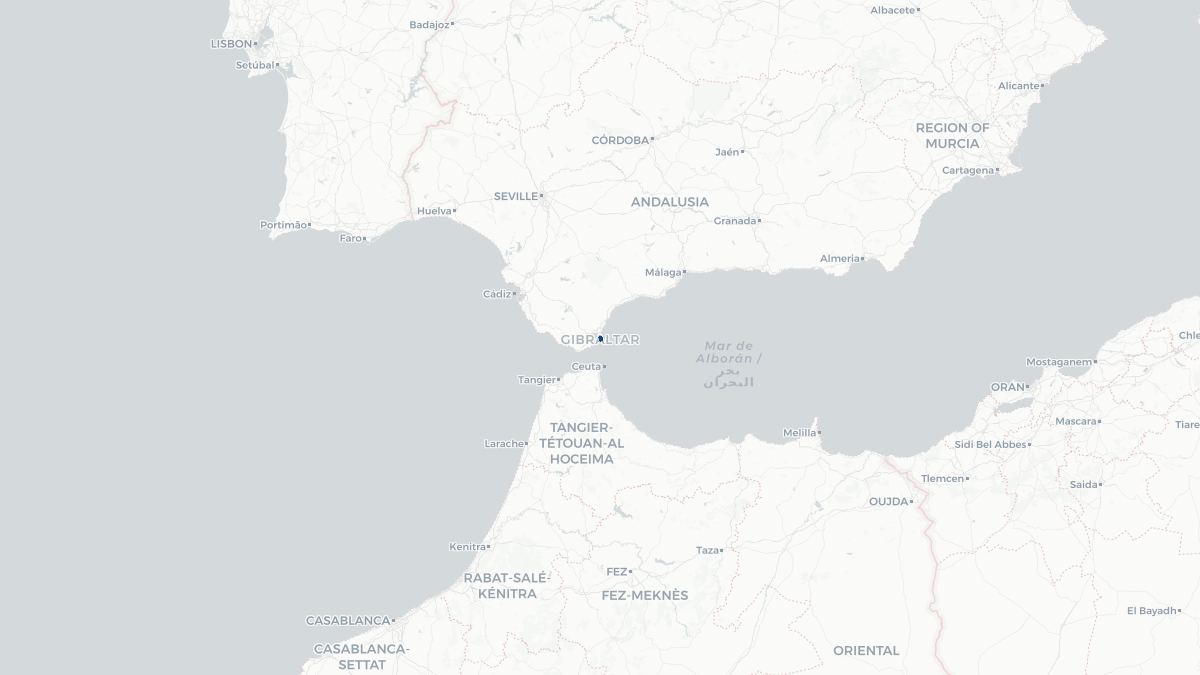
Here you find a map of Gibraltar, capital Gibraltar, currency Gibraltar pund and quick links to more facts about the country in Europe.
Mini-quiz
Test yourself: 3 questions about Gibraltar
About the country
Gibraltar on the map
About Gibraltar
Gibraltar is a British Overseas Territory located at the southern tip of the Iberian Peninsula, at the entrance to the Mediterranean Sea. It shares a land border with Spain to the north and overlooks the Strait of Gibraltar, which separates Europe from Africa at a distance of approximately 14 kilometres. The territory covers just 6.7 square kilometres and has a population of approximately 34,000, making it one of the most densely populated territories in the world. Gibraltar has a high degree of internal self-governance, with its own elected Parliament, Chief Minister, and cabinet, while the United Kingdom retains responsibility for defence and foreign affairs. Spain continues to claim sovereignty over Gibraltar, a dispute that predates the 1713 Treaty of Utrecht. In a 2002 referendum, Gibraltarians rejected a proposal for shared British-Spanish sovereignty by 98 percent. The economy is driven by financial services, tourism, online gaming, and shipping. The currency is the Gibraltar pound.
Geography and Landscape
Gibraltar is dominated by the Rock of Gibraltar, a dramatic limestone monolith rising to 426 metres. The Rock runs roughly north to south along the eastern side of the territory and falls away steeply to the Mediterranean on the east and more gradually to the built-up western lowlands where the town, port, and airport are located. The western face contains a network of tunnels and galleries, many dating from military use. The Upper Rock is a nature reserve home to the famous Barbary macaques, the only wild primate population in Europe. The Mediterranean coast features shingle and sandy beaches. The climate is Mediterranean, with hot dry summers and mild wet winters, though the Rock creates its own localised cloud formation, the Levanter cloud, caused by easterly winds. The Strait of Gibraltar is one of the world's most important shipping lanes, with heavy vessel traffic passing between the Atlantic and Mediterranean daily.
History
Gibraltar has been inhabited since prehistoric times, with Neanderthal remains discovered in Forbes' Quarry and Gorham's Cave, the latter now a UNESCO World Heritage Site. The Moors crossed from Africa and captured the Rock in 711 AD, naming it Jebel al-Tariq — the Mountain of Tariq — from which the name Gibraltar derives. It was captured by Castile in 1462 and ceded to Britain by Spain under the Treaty of Utrecht in 1713 following the War of the Spanish Succession. Britain has maintained continuous sovereignty since, withstanding multiple Spanish sieges, most famously the Great Siege of Gibraltar from 1779 to 1783. During World War II, Gibraltar was heavily fortified and served as a vital Allied naval and air base, with the civilian population largely evacuated to Britain, Jamaica, and Madeira. The territory's strategic importance diminished after the war, but Gibraltar retained its military significance and developed a prosperous civilian economy. In 1969, a new constitution confirmed Gibraltarians' right to self-determination.
Questions about Gibraltar
What is the capital of Gibraltar?
Gibraltar is the capital of Gibraltar.
What currency is used in Gibraltar?
Pound (GIP) is the currency of Gibraltar.
What languages are spoken in Gibraltar?
Languages spoken in Gibraltar: en-GI,es,it,pt.
Which countries border Gibraltar?
Gibraltar borders Spain.
In which continent is Gibraltar?
Gibraltar is located in Europe.
Neighbouring countries
Continue to nearby countries
More countries in the same part of the world
Europe index
Open the continent hub for Europe to see the full country list, capitals and frequently asked questions on one page.
Interactive map
Zoomable map of Gibraltar
Country index
All countries by continent
Jump directly to the right section or keep scrolling.
Africa
58 countries- Algeria
- Angola
- Benin
- Botswana
- Burkina Faso
- Burundi
- Central African Republic
- Djibouti
- Democratic Republic of the Congo
- Egypt
- Equatorial Guinea
- Ivory Coast
- Eritrea
- Eswatini
- Ethiopia
- Gabon
- Gambia
- Ghana
- Guinea
- Guinea-Bissau
- Cameroon
- Cape Verde
- Kenya
- Comoros
- Republic of the Congo
- Lesotho
- Liberia
- Libya
- Madagascar
- Malawi
- Mali
- Morocco
- Mauritania
- Mauritius
- Mayotte
- Mozambique
- Namibia
- Niger
- Nigeria
- Reunion
- Rwanda
- Saint Helena
- Sao Tome and Principe
- Senegal
- Seychelles
- Sierra Leone
- Somalia
- Sudan
- South Africa
- South Sudan
- Tanzania
- Chad
- Togo
- Tunisia
- Uganda
- Western Sahara
- Zambia
- Zimbabwe
Asia
52 countries- Afghanistan
- Armenia
- Azerbaijan
- Bahrain
- Bangladesh
- Bhutan
- British Indian Ocean Territory
- Brunei
- Philippines
- United Arab Emirates
- Georgia
- Hong Kong
- India
- Indonesia
- Iraq
- Iran
- Israel
- Japan
- Yemen
- Jordan
- Christmas Island
- Cambodia
- Kazakhstan
- China
- Kyrgyzstan
- Cocos Islands
- Kuwait
- Laos
- Lebanon
- Macau
- Malaysia
- Maldives
- Mongolia
- Myanmar
- Nepal
- North Korea
- Oman
- Pakistan
- Palestinian Territory
- Qatar
- Saudi Arabia
- Singapore
- Sri Lanka
- South Korea
- Syria
- Tajikistan
- Taiwan
- Thailand
- Turkey
- Turkmenistan
- Uzbekistan
- Vietnam
Europe
53 countries- Albania
- Andorra
- Belarus
- Belgium
- Bosnia and Herzegovina
- Bulgaria
- Cyprus
- Denmark
- Estonia
- Finland
- France
- Faroe Islands
- Gibraltar
- Greece
- Guernsey
- Ireland
- Iceland
- Isle of Man
- Italy
- Jersey
- Kosovo
- Croatia
- Latvia
- Liechtenstein
- Lithuania
- Luxembourg
- Malta
- Moldova
- Monaco
- Montenegro
- Netherlands
- North Macedonia
- Norway
- Poland
- Portugal
- Romania
- Russia
- San Marino
- Switzerland
- Serbia
- Slovakia
- Slovenia
- Spain
- United Kingdom
- Svalbard and Jan Mayen
- Sweden
- Czech Republic
- Germany
- Ukraine
- Hungary
- Vatican
- Aland Islands
- Austria
North America
42 countries- U.S. Virgin Islands
- Anguilla
- Antigua and Barbuda
- Aruba
- Bahamas
- Barbados
- Belize
- Bermuda
- Bonaire, Saint Eustatius and Saba
- British Virgin Islands
- Cayman Islands
- Costa Rica
- Curacao
- Dominica
- Dominican Republic
- El Salvador
- Grenada
- Greenland
- Guadeloupe
- Guatemala
- Haiti
- Honduras
- Jamaica
- Canada
- Cuba
- Martinique
- Mexico
- Montserrat
- Netherlands Antilles
- Nicaragua
- Panama
- Puerto Rico
- Saint Barthelemy
- Saint Kitts and Nevis
- Saint Lucia
- Saint Martin
- Saint Vincent and the Grenadines
- Saint Pierre and Miquelon
- Sint Maarten
- Trinidad and Tobago
- Turks and Caicos Islands
- United States
South America
14 countriesOceania
27 countries- American Samoa
- Australia
- Cook Islands
- Fiji
- French Polynesia
- United States Minor Outlying Islands
- Guam
- Kiribati
- Marshall Islands
- Micronesia
- Nauru
- Niue
- Northern Mariana Islands
- Norfolk Island
- New Caledonia
- New Zealand
- Palau
- Papua New Guinea
- Pitcairn
- Solomon Islands
- Samoa
- Tokelau
- Tonga
- Tuvalu
- Vanuatu
- Wallis and Futuna
- East Timor