
Europe
Vatican — map and facts
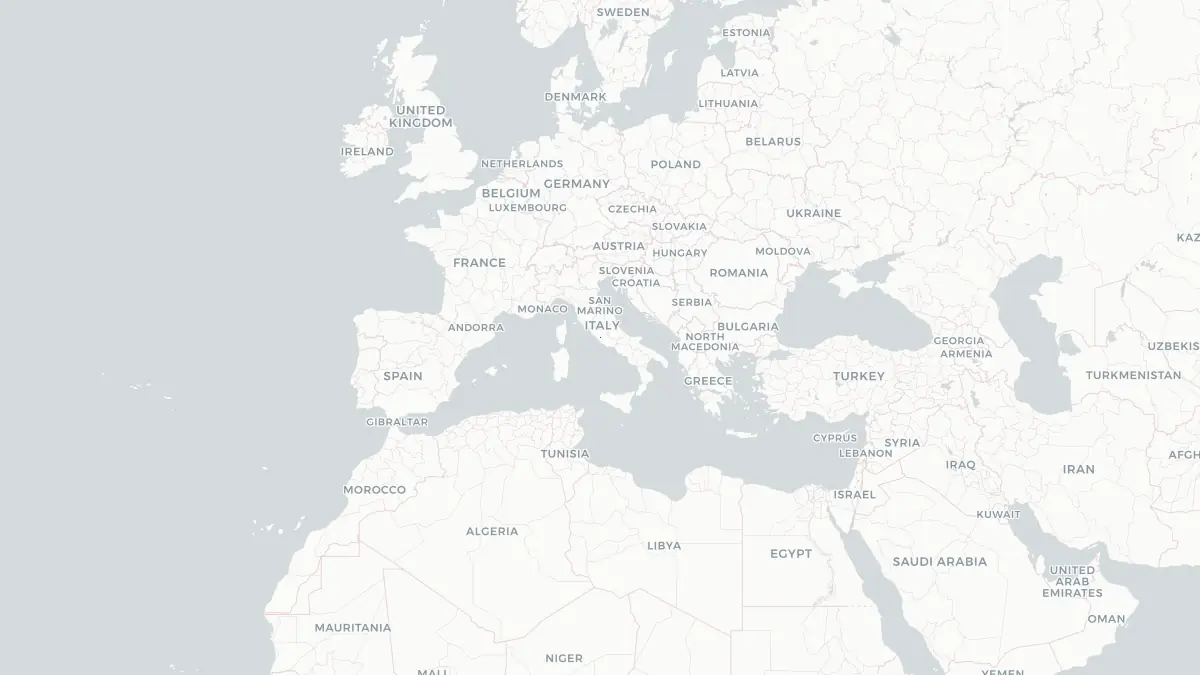
Here you find a map of Vatican, capital Vatican City, currency Euro and quick links to more facts about the country in Europe.
About the country
Vatican on the map
About Vatican City
Vatican City is the world's smallest internationally recognised sovereign state, covering just 0.44 square kilometres within the city of Rome, with a resident population of approximately 800. It is the seat of the Catholic Church and the residence of the Pope, who serves as its head of state. Vatican City was established as an independent state by the Lateran Treaty signed between the Holy See and the Kingdom of Italy on 11 February 1929. The state is an elective monarchy — the Pope is elected for life by the College of Cardinals. Vatican City is not a UN member state but holds permanent observer status. It has its own postal service, radio station (Radio Vaticana), daily newspaper (L'Osservatore Romano), and gendarmerie. The official languages are Latin and Italian; Italian is used in daily administration.
Geography and Landscape
Vatican City is an enclave entirely within Rome, on the west bank of the Tiber River. Its boundaries are largely defined by the walls built to protect the papacy, along with open spaces on the south side. The territory includes St Peter's Square (technically an extraterritorial space), St Peter's Basilica — the world's largest church — the Apostolic Palace, the Sistine Chapel, the Vatican Museums, and the Vatican Gardens, which cover about half the territory. There are no natural geographic features of significance; the land is flat urban terrain. The climate is Mediterranean, identical to Rome's, with hot, dry summers and mild, wetter winters.
History
The area of the Vatican Hill (Mons Vaticanus) was on the right bank of the Tiber, outside the ancient city of Rome, and used as gardens and burial grounds. The Apostle Peter is believed to have been martyred and buried here in the first century AD; Constantine the Great built a basilica over his tomb in the fourth century. The papacy gradually accumulated temporal power in central Italy, creating the Papal States, which lasted from the eighth century until 1870, when Italian unification forces seized Rome. The Pope retreated to the Vatican and refused to recognise the Italian state. The 1929 Lateran Treaty resolved the "Roman Question" by creating Vatican City as an independent state, in exchange for the Holy See recognising Italy. The Second Vatican Council (1962–1965) under Pope John XXIII modernised the Catholic Church profoundly.
Geo Quiz
Think you know your capitals, flags, and continents? Take the quiz!
Neighbouring countries
Continue to nearby countries
More countries in the same part of the world
Europe index
Open the continent hub for Europe to see the full country list, capitals and frequently asked questions on one page.
Interactive map
Zoomable map of Vatican
Country index
All countries by continent
Jump directly to the right section or keep scrolling.
Africa
58 countries- Algeria
- Angola
- Benin
- Botswana
- Burkina Faso
- Burundi
- Central African Republic
- Djibouti
- Democratic Republic of the Congo
- Egypt
- Equatorial Guinea
- Ivory Coast
- Eritrea
- Ethiopia
- Gabon
- Gambia
- Ghana
- Guinea
- Guinea-Bissau
- Cameroon
- Cape Verde
- Kenya
- Comoros
- Republic of the Congo
- Lesotho
- Liberia
- Libya
- Madagascar
- Malawi
- Mali
- Morocco
- Mauritania
- Mauritius
- Mayotte
- Mozambique
- Namibia
- Niger
- Nigeria
- Reunion
- Rwanda
- Saint Helena
- Sao Tome and Principe
- Senegal
- Seychelles
- Sierra Leone
- Somalia
- Sudan
- Swaziland
- South Africa
- South Sudan
- Tanzania
- Chad
- Togo
- Tunisia
- Uganda
- Western Sahara
- Zambia
- Zimbabwe
Asia
52 countries- Afghanistan
- Armenia
- Azerbaijan
- Bahrain
- Bangladesh
- Bhutan
- British Indian Ocean Territory
- Brunei
- Myanmar
- Philippines
- United Arab Emirates
- Georgia
- Hong Kong
- India
- Indonesia
- Iraq
- Iran
- Israel
- Japan
- Yemen
- Jordan
- Christmas Island
- Cambodia
- Kazakhstan
- China
- Kyrgyzstan
- Cocos Islands
- Kuwait
- Laos
- Lebanon
- Macau
- Malaysia
- Maldives
- Mongolia
- Nepal
- North Korea
- Oman
- Pakistan
- Palestinian Territory
- Qatar
- Saudi Arabia
- Singapore
- Sri Lanka
- South Korea
- Syria
- Tajikistan
- Taiwan
- Thailand
- Turkey
- Turkmenistan
- Uzbekistan
- Vietnam
Europe
53 countries- Albania
- Andorra
- Belgium
- Bosnia and Herzegovina
- Bulgaria
- Cyprus
- Denmark
- Estonia
- Finland
- France
- Faroe Islands
- Gibraltar
- Greece
- Guernsey
- Ireland
- Iceland
- Isle of Man
- Italy
- Jersey
- Kosovo
- Croatia
- Latvia
- Liechtenstein
- Lithuania
- Luxembourg
- Macedonia
- Malta
- Moldova
- Monaco
- Montenegro
- Netherlands
- Norway
- Poland
- Portugal
- Romania
- Russia
- San Marino
- Switzerland
- Serbia
- Slovakia
- Slovenia
- Spain
- United Kingdom
- Svalbard and Jan Mayen
- Sweden
- Czech Republic
- Germany
- Ukraine
- Hungary
- Vatican
- Belarus
- Aland Islands
- Austria
North America
42 countries- U.S. Virgin Islands
- Anguilla
- Antigua and Barbuda
- Aruba
- Bahamas
- Barbados
- Belize
- Bermuda
- Bonaire, Saint Eustatius and Saba
- British Virgin Islands
- Cayman Islands
- Costa Rica
- Curacao
- Dominica
- Dominican Republic
- El Salvador
- Grenada
- Greenland
- Guadeloupe
- Guatemala
- Haiti
- Honduras
- Jamaica
- Canada
- Cuba
- Martinique
- Mexico
- Montserrat
- Netherlands Antilles
- Nicaragua
- Panama
- Puerto Rico
- Saint Barthelemy
- Saint Kitts and Nevis
- Saint Lucia
- Saint Martin
- Saint Vincent and the Grenadines
- Saint Pierre and Miquelon
- Sint Maarten
- Trinidad and Tobago
- Turks and Caicos Islands
- United States
South America
14 countriesOceania
27 countries- American Samoa
- Australia
- Cook Islands
- Fiji
- French Polynesia
- United States Minor Outlying Islands
- Guam
- Kiribati
- Marshall Islands
- Micronesia
- Nauru
- Niue
- Northern Mariana Islands
- Norfolk Island
- New Caledonia
- New Zealand
- Palau
- Papua New Guinea
- Pitcairn
- Solomon Islands
- Samoa
- Tokelau
- Tonga
- Tuvalu
- Vanuatu
- Wallis and Futuna
- East Timor