
Europe
Kosovo — map and facts
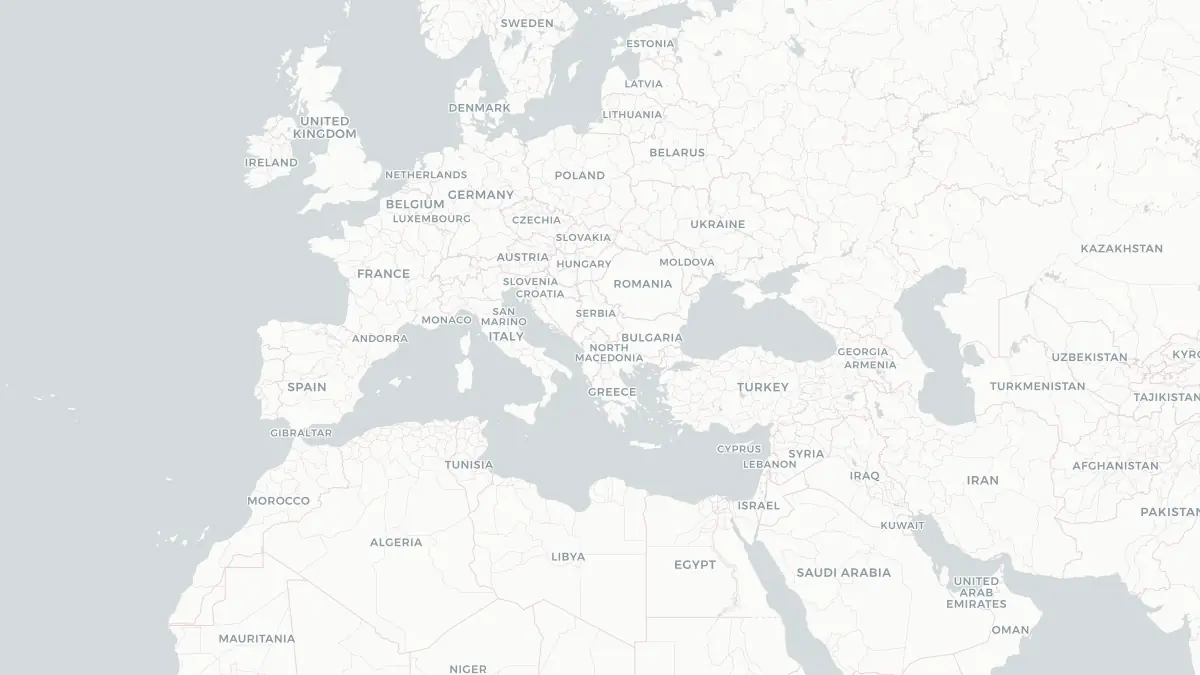
Here you find a map of Kosovo, capital Pristina, currency Euro and quick links to more facts about the country in Europe.
About the country
Kosovo on the map
About Kosovo
Kosovo is a partially recognised state in the western Balkans, declared independence from Serbia on 17 February 2008 and is recognised by over 100 UN member states, including the United States and most EU members, though not by Russia, China, or Serbia. Its capital is Pristina (Prishtina). Kosovo is the youngest country in Europe with a predominantly Albanian-speaking population of approximately 1.8 million. It is an EU candidate and a member of the International Monetary Fund and World Bank. The economy relies on remittances, small-scale services, and manufacturing. Kosovo uses the euro as its currency, though not a eurozone member. A small Serb minority remains, mainly in the north of the country near the Serbian border.
Geography and Landscape
Kosovo is a small, landlocked territory covering approximately 10,887 square kilometres, surrounded by Serbia, North Macedonia, Albania, and Montenegro. The landscape is characterised by two main basins — the Kosovo Plain (Rrafshi i Kosovës) in the east, historically and culturally significant, and the Dukagjini Plain in the west around Peja/Pe?. Mountain ranges surround the country on all sides: the Šar Mountains in the south (shared with North Macedonia), the Prokletije (Accursed Mountains) along the Albanian border, and the Kopaonik range along the Serbian border. The Kosovo Plain is agriculturally fertile, while the uplands are forested. The Ibar and White Drin rivers are the main waterways. The climate is continental with cold winters and warm summers.
History
Kosovo has been inhabited since prehistoric times and contains significant Neolithic archaeological sites. In the medieval period, Kosovo was the heartland of the Serbian Empire; the famous Patriarchate of Pe? and numerous Serbian Orthodox monasteries testify to this heritage. The Battle of Kosovo (1389) between the Serbian Prince Lazar and the Ottoman Sultan Murad I became a defining myth of Serbian identity, though it did not end Serbian autonomy immediately. Kosovo fell fully under Ottoman rule in the fifteenth century. Albanian national consciousness grew in the nineteenth century. After the Balkan Wars (1912–1913), Kosovo was incorporated into Serbia. Within Yugoslavia, Kosovo was an autonomous province of Serbia; its autonomy was revoked by Slobodan Miloševi? in 1989, triggering significant unrest. The Kosovo War (1998–1999) led to NATO intervention; Serbian forces withdrew, and Kosovo was placed under UN administration. It declared independence in 2008.
Geo Quiz
Think you know your capitals, flags, and continents? Take the quiz!
Neighbouring countries
Continue to nearby countries
More countries in the same part of the world
Europe index
Open the continent hub for Europe to see the full country list, capitals and frequently asked questions on one page.
Interactive map
Zoomable map of Kosovo
Country index
All countries by continent
Jump directly to the right section or keep scrolling.
Africa
58 countries- Algeria
- Angola
- Benin
- Botswana
- Burkina Faso
- Burundi
- Central African Republic
- Djibouti
- Democratic Republic of the Congo
- Egypt
- Equatorial Guinea
- Ivory Coast
- Eritrea
- Ethiopia
- Gabon
- Gambia
- Ghana
- Guinea
- Guinea-Bissau
- Cameroon
- Cape Verde
- Kenya
- Comoros
- Republic of the Congo
- Lesotho
- Liberia
- Libya
- Madagascar
- Malawi
- Mali
- Morocco
- Mauritania
- Mauritius
- Mayotte
- Mozambique
- Namibia
- Niger
- Nigeria
- Reunion
- Rwanda
- Saint Helena
- Sao Tome and Principe
- Senegal
- Seychelles
- Sierra Leone
- Somalia
- Sudan
- Swaziland
- South Africa
- South Sudan
- Tanzania
- Chad
- Togo
- Tunisia
- Uganda
- Western Sahara
- Zambia
- Zimbabwe
Asia
52 countries- Afghanistan
- Armenia
- Azerbaijan
- Bahrain
- Bangladesh
- Bhutan
- British Indian Ocean Territory
- Brunei
- Myanmar
- Philippines
- United Arab Emirates
- Georgia
- Hong Kong
- India
- Indonesia
- Iraq
- Iran
- Israel
- Japan
- Yemen
- Jordan
- Christmas Island
- Cambodia
- Kazakhstan
- China
- Kyrgyzstan
- Cocos Islands
- Kuwait
- Laos
- Lebanon
- Macau
- Malaysia
- Maldives
- Mongolia
- Nepal
- North Korea
- Oman
- Pakistan
- Palestinian Territory
- Qatar
- Saudi Arabia
- Singapore
- Sri Lanka
- South Korea
- Syria
- Tajikistan
- Taiwan
- Thailand
- Turkey
- Turkmenistan
- Uzbekistan
- Vietnam
Europe
53 countries- Albania
- Andorra
- Belgium
- Bosnia and Herzegovina
- Bulgaria
- Cyprus
- Denmark
- Estonia
- Finland
- France
- Faroe Islands
- Gibraltar
- Greece
- Guernsey
- Ireland
- Iceland
- Isle of Man
- Italy
- Jersey
- Kosovo
- Croatia
- Latvia
- Liechtenstein
- Lithuania
- Luxembourg
- Macedonia
- Malta
- Moldova
- Monaco
- Montenegro
- Netherlands
- Norway
- Poland
- Portugal
- Romania
- Russia
- San Marino
- Switzerland
- Serbia
- Slovakia
- Slovenia
- Spain
- United Kingdom
- Svalbard and Jan Mayen
- Sweden
- Czech Republic
- Germany
- Ukraine
- Hungary
- Vatican
- Belarus
- Aland Islands
- Austria
North America
42 countries- U.S. Virgin Islands
- Anguilla
- Antigua and Barbuda
- Aruba
- Bahamas
- Barbados
- Belize
- Bermuda
- Bonaire, Saint Eustatius and Saba
- British Virgin Islands
- Cayman Islands
- Costa Rica
- Curacao
- Dominica
- Dominican Republic
- El Salvador
- Grenada
- Greenland
- Guadeloupe
- Guatemala
- Haiti
- Honduras
- Jamaica
- Canada
- Cuba
- Martinique
- Mexico
- Montserrat
- Netherlands Antilles
- Nicaragua
- Panama
- Puerto Rico
- Saint Barthelemy
- Saint Kitts and Nevis
- Saint Lucia
- Saint Martin
- Saint Vincent and the Grenadines
- Saint Pierre and Miquelon
- Sint Maarten
- Trinidad and Tobago
- Turks and Caicos Islands
- United States
South America
14 countriesOceania
27 countries- American Samoa
- Australia
- Cook Islands
- Fiji
- French Polynesia
- United States Minor Outlying Islands
- Guam
- Kiribati
- Marshall Islands
- Micronesia
- Nauru
- Niue
- Northern Mariana Islands
- Norfolk Island
- New Caledonia
- New Zealand
- Palau
- Papua New Guinea
- Pitcairn
- Solomon Islands
- Samoa
- Tokelau
- Tonga
- Tuvalu
- Vanuatu
- Wallis and Futuna
- East Timor